

Key Takeaways
Read Russia's map as both a shield and a trap
Geography sets the terms. Hosking begins with Inner Eurasia, a vast plain bounded by Arctic cold and southern and eastern mountains, but open to the west. Rivers helped people and goods move across it. Yet thin soils, harsh seasons, and enormous distances made farming, communication, and defense difficult. Forests offered Moscow more protection than Kiev; the southern steppe offered fertile land but also invited raids.
Expansion brought new exposure. The open terrain let rulers retreat, recover, and expand into borderlands. But each conquest lengthened the frontier and added peoples with different languages, faiths, and customs. Russia's territory offered extraordinary strategic depth, while making it costly to govern and easy to invade. Geography shaped the political problem without dictating a single solution.
What's striking is that geography works here less as destiny than as a recurring constraint on state capacity. Long distances raise the cost of moving information and resources, while vulnerable borders reward rulers who can mobilize quickly. That helps explain why territorial expansion could look like security policy even when it created fresh risks. The useful caution is that landscapes do not rule by themselves: rulers choose how much security to buy, and at whose expense.
Build local systems for survival, but notice what they demand
Risk encouraged cooperation. In a village where one bad harvest, illness, or fire could ruin a household, neighbors needed dependable ways to share burdens. The mir was the village community that allocated land, managed shared resources, and distributed taxes and obligations. Pomochi, emergency mutual aid, helped neighbors rebuild a hut or bring in a sick household's harvest.
Community had a moral code. Pravda meant more than factual truth: it named what the community considered right, just, and in keeping with God's law. But village assemblies were not modern democracies. Heads of households, usually older men, dominated decisions. Volia meant freedom from constraint, often imagined as escape to the open frontier, rather than equal civic freedom. These institutions protected people while restricting individual choice.
The village commune resembles a local insurance system: shared risk can keep vulnerable households from collapsing when formal safety nets are absent. It also shows why collective institutions can feel both protective and oppressive. The same rules that spread a harvest loss across neighbors can restrict mobility, discipline dissent, and privilege established households. The distinction matters today: solidarity is not automatically democratic, especially when membership and voice are unequal.
When law is thin, personal patronage becomes the state
Muscovy ruled through intermediaries. Kievan Rus weakened as trade routes shifted and rival princes treated territories as family property. Mongol rule imposed tribute, censuses, and military obligations, but usually left local princes in place. Moscow gained influence by collecting tribute for the Golden Horde and using the authority that job brought. The arrangement called kormlenie let officials support themselves by collecting local revenues while passing a portion upward.
Power remained personal. Moscow's rulers later distributed service estates, or pomestia, to retainers who owed military and administrative service. The church, meanwhile, became a powerful institution that could speak for a wider Rus. This system mobilized people and resources across a huge territory, but authority rested on relationships among rulers, officials, and communities more than on stable, impersonal institutions.
This is a vivid case of a state growing through networks before it develops a reliable bureaucracy. Patronage can transmit orders where courts and institutions are weak, but it also makes access depend on personal favor. That tradeoff helps explain both the durability of Russian rule and its recurring vulnerability to factional conflict. The arrangement can mobilize quickly, yet it gives citizens few predictable ways to challenge abuse or hold officials accountable.
Modernize to survive, but imported machinery cannot create civic trust
Peter sought military survival. The defeat at Narva in 1700 exposed the limits of Russia's army against Sweden. Peter responded by building a standing army, expanding taxation, requiring service, and founding a navy. He took the Baltic coast and made St. Petersburg a new capital, visibly turning Russia toward Europe. The Table of Ranks linked advancement to service rather than pedigree, at least in principle.
The state grew faster than society. Peter also replaced older offices with specialized administrations and subordinated the church to the state. These reforms helped mobilize resources, but they relied on coercion and personal authority, not on autonomous civic institutions. The result was a striking paradox: Western forms and skills strengthened a political system that remained highly centralized and dependent on compulsory service.
Peter's reforms illustrate the difference between importing institutions and building the habits that make them work. A rank system or ministry can improve coordination, but it cannot by itself create trust, accountability, or shared political ownership. The reforms were effective at raising military capacity, which was their urgent purpose. Their limits become clearer when modernization is treated as a technical project alone, rather than as a change in the relationship between state and society.
Hold a multiethnic empire together without mistaking obedience for belonging
Russia carried competing identities. It could imagine itself as heir to Orthodox Byzantium, home to the East Slavs, or a multiethnic Eurasian empire. These visions overlapped but were not identical. The claim that Moscow was the Third Rome expressed the church's belief that Russia inherited a special Orthodox mission after Byzantium fell.
Religious unity could also divide. In the seventeenth century Patriarch Nikon changed Russian rituals to align them more closely with Greek practice. Many believers saw the revisions as betrayal and became Old Believers, preserving older rites outside the official church. Meanwhile, imperial expansion incorporated Muslims and other non-Orthodox peoples. The state could demand loyalty from a diverse population, but a single official faith or culture did not make that population feel equally at home.
The distinction between governing diversity and creating belonging is central here. A state may preserve order across many groups while leaving its citizens with different ideas of what the state is for. The Old Believer schism shows that even small ritual changes can become political when they signal who controls a community's identity. A durable multinational polity needs room for shared institutions and meaningful difference, not just one official story.
Freeing serfs is not enough: make citizenship usable
Emancipation left peasants constrained. In 1861 serfs gained personal freedom, but their land allotments came through village communities and redemption payments. Many remained tied to communal obligations and separate legal arrangements. Freedom from a landlord did not immediately provide equal access to courts, property, or political power.
Reform created openings, not a full settlement. Zemstvos, elected local assemblies, and new courts expanded public life after 1864. Yet peasants had limited influence, and the system lacked representative institutions at the national level. Emergency powers also allowed officials to curb civil liberties. The reforms weakened old personal rule but did not build a consistent framework that connected local communities to the central state.
The emancipation shows why formal rights and usable rights are not the same. A person may be legally free yet still lack mobility, representation, or access to an impartial court. The new local institutions offered genuine civic experience, but their reach stopped short of a national political system. Reform that changes status without changing access can create new expectations faster than institutions can meet them.
Give grievances a shared forum before revolt becomes rival rule
Different groups wanted different futures. In 1905 workers used soviets, elected councils of workers' representatives, to organize strikes; peasants demanded land; liberals sought constitutional government; and national movements challenged imperial rule. The regime survived by dividing the opposition and restoring coercive control. No shared institution could turn the groups' overlapping complaints into a durable political settlement.
In 1917 the divide widened. The monarchy fell, but the Provisional Government and the soviets competed for authority. Soldiers deserted, peasants seized land, and workers demanded control of factories. The Bolsheviks gained power by promising peace, land, and authority for the soviets. Civil war then pushed them to centralize rule and suppress rivals, including many who had helped overthrow the old order.
The revolutions reveal a collective-action problem: groups may share grievances without agreeing on a common destination. Soviets gave workers and soldiers a forum, but no stable system linked them to peasants, national movements, and the Provisional Government. When common institutions are weak, the most organized faction can capture the opening. The pattern is not that popular demands inevitably produce dictatorship, but that a vacuum makes coercive organization unusually powerful.
Industrialize by command, and you may build capacity by breaking trust
Stalin forced a transformation. The first five-year plans redirected resources into heavy industry, while collectivization brought agriculture under state control. During the 1930s millions died from famine, terror, deportation, and the dislocation of forced change. The regime created factories, cities, and a more powerful state, but it did so through coercion and extraordinary human cost.
The Soviet Union also built nations. It assigned national territories, languages, and institutions to many peoples, while centralizing political and economic power in Moscow. The Soviet system thus strengthened national identities even as it denied them sovereignty. During the Second World War, a powerful patriotic bond helped defeat Germany, but deportations and Russian dominance left deep grievances inside the multinational state.
The book's account exposes the double edge of high-modernist planning: concentrated authority can build infrastructure and industrial capacity at remarkable speed, yet the same machinery can treat people as inputs and destroy local knowledge. The nationalities policy adds another paradox. Institutions that recognize group identity can create durable political expectations, even when they are designed to keep power centralized. Capacity gained through fear may be powerful, but it is not the same as consent.
A superpower can survive invasion, yet unravel when its union lacks consent
Victory did not resolve the Soviet bargain. The Second World War strengthened Soviet patriotism and helped the state recover, but postwar society remained shaped by shortages, patronage, and political control. Under Brezhnev, the system offered stability and basic security while economic growth slowed and informal networks filled gaps left by rigid planning.
Reform reopened the question of belonging. Gorbachev's glasnost encouraged public debate, while perestroika tried to reform the economy and political system. These changes exposed national claims the Soviet Union had partly institutionalized but never fully reconciled with centralized rule. When republics asserted sovereignty, the party-state could no longer hold the union together. The empire endured defeat, but not a crisis of legitimacy inside its own borders.
The ending is not simply a story of economic failure or an inevitable collapse. The Soviet Union had survived enormous military losses and retained formidable state capacity. Its deeper weakness was that the system had never settled who could legitimately speak for the union: the central party, the Russian core, or the republics and peoples it had formally recognized. Reform made that unresolved question public, and coercion could no longer answer it convincingly.
Analysis
Hosking's central explanatory strength is the connection he draws among geography, political structure, and national identity. Russia's scale and exposed borders help explain why rulers repeatedly pursued expansion and rapid mobilization. The same pressures also favored personal networks over durable intermediate institutions. Across the book, the state grows powerful at the center while communities remain resilient locally, leaving a fragile space between them. This framework makes sense of otherwise disparate episodes: Mongol tribute collection, Muscovite service estates, serfdom, Soviet planning, and the breakup of the USSR. The argument is most persuasive when it treats Russian history as a series of institutional bargains rather than as an expression of an unchanging national character. The village commune, the service elite, the party, and the republics each supplied ways to mobilize people, distribute resources, or claim legitimacy. Yet Hosking sometimes moves from environmental pressures to broad claims about Russian mentalities with more confidence than the evidence can bear. The same geography produced different institutions in neighboring societies, and Russia's rulers made choices, not simply reactions, when they centralized power or suppressed local autonomy.
The book's deepest paradox is that imperial integration both weakened and created nations. The Soviet state built national territories, languages, and cadres while denying those republics sovereignty. This policy stabilized the empire for decades but also furnished political identities that could challenge it when central authority weakened. The result was neither a straightforward national awakening nor an inevitable collapse. It was a political structure whose legitimacy depended on a central party that could command loyalty, deliver material security, and manage difference. Once those capacities faltered together, the union's contradictory foundations became impossible to conceal.
Review Summary
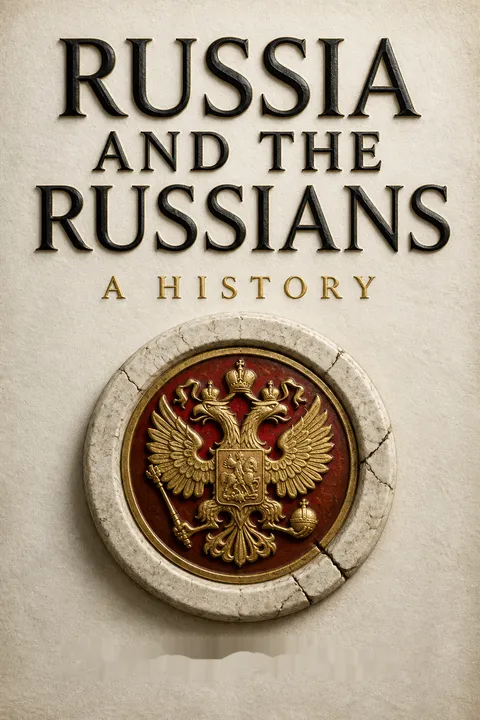
Russia and the Russians by Geoffrey Hosking receives an average rating of 3.97/5 from 596 reviews. Readers praise its comprehensive scope covering 500-2001, accessible writing style, and deep analysis of Russian state-building, nationalism, and culture. Many appreciate the thematic approach connecting centuries of history through patterns like patrimonial rule and Russia's European-Asian identity struggle. Common criticisms include lack of glossary for Russian terms, confusing organization, similar names without clarification, and disproportionate focus on the 20th century. The book is recommended for beginners seeking broad understanding, though some find it too scholarly or dense.
People Also Read





Glossary
Inner Eurasia
Russia's continental heartlandHosking's geographical term for the vast north Eurasian territory ruled by the Soviet Union in 1990, together with Xinjiang and Mongolia. Its plains, forests, steppes, deserts, and rivers shaped movement, settlement, trade, and defense. The concept highlights both Russia's strategic depth and the difficulty of governing a remote, diverse land.
mir
Village self-governing communityThe Russian rural community that regulated common resources, allocated land and obligations, and provided a forum for village decisions. Its members were bound by joint responsibility for taxes and other duties. The mir helped households manage risk, but its assemblies were not modern democracies and often excluded women and younger people from meaningful authority.
pravda
Community-defined moral justiceA specialized Russian term meaning more than factual truth. In village life, pravda encompassed justice, morality, conscience, and what the community understood as God's law. It offered a standard by which local decisions and officials could be judged, even when formal institutions were weak.
volia
Freedom from constraintA form of freedom associated with escape from social restraint and departure for the open frontier. Unlike civic liberty, volia did not depend on respecting other people's equivalent rights. It helps explain why people left villages to become Cossacks, migrate, or otherwise escape local obligations.
kormlenie
Officials paid through local revenuesA Muscovite practice by which appointed officials collected dues and revenues from the communities they governed, kept a portion to support themselves, and passed a share to the ruler. It helped administer territory where direct government was difficult, but tied public authority to personal power and local extraction.
pomestie
Land granted for state serviceA service estate awarded to a military or administrative servant, usually in return for obligations to the ruler. It helped Muscovy reward officials and support an expanding army. Unlike unrestricted private property, a pomestie was tied to service and could not freely be sold or transferred.
Moscow the Third Rome
Moscow as Orthodox successorA religious and political idea that Moscow inherited a special role in defending Orthodox Christianity after Rome and Constantinople had fallen from the true faith. Church writers used it to elevate Russia's status while also implying that its ruler had duties to uphold the faith. The idea was powerful but politically ambiguous.
sobornost
Unity through shared deliberationA Slavophile concept describing unity formed through common reflection and action, rather than through individualism or coercion. Its advocates saw it in the Russian village commune and Orthodox Church. The idea offered an alternative to Western parliamentary models, though the communities it idealized could be hierarchical and restrictive.
zemstvo
Elected local government assemblyA local government body introduced after the emancipation of the serfs, with assemblies at district and provincial levels. Zemstvos worked on services such as education and health and brought professionals into public life. Their authority was limited, peasants were underrepresented, and they had no direct national counterpart.
obshchestvennost
Politically aware educated societyA Russian term for the politically conscious, educated public that grew around professionals, zemstvo workers, writers, and other civic actors. It implied a civil society that remained incomplete. Its members often believed they served the nation more effectively than the state, creating recurring tension with imperial authority.
nomenklatura
Party-controlled personnel hierarchyThe system through which Communist Party bodies approved appointments to important positions across government, the economy, and public life. It created a ruling elite linked by career dependence and patronage. In practice, it helped central authorities coordinate institutions while also enabling local networks to protect their own interests.
kolkhoz
Collective agricultural farmA collective farm created during Stalin's forced collectivization of agriculture. Peasants worked land and resources held collectively, while the state controlled deliveries and the broader system of production. Kolkhozy supplied towns and the army, but underinvestment, coercion, and limited returns left rural life poor and politically constrained.
New Economic Policy
Limited return to marketsThe policy introduced in 1921 after War Communism and widespread economic collapse. It replaced grain requisitioning with a tax and allowed private trade and small-scale enterprise, while the state retained control of major industries. NEP revived production and exchange but restored neither a free economy nor political pluralism.
glasnost
Greater public opennessA reform principle associated with Gorbachev that encouraged public discussion and greater access to information. It allowed citizens and journalists to examine previously suppressed history and challenge official claims. The resulting debate exposed conflicts over the Soviet Union's legitimacy, nationalities, and political authority.
Download PDF
Download EPUB
.epub digital book format is ideal for reading ebooks on phones, tablets, and e-readers.








