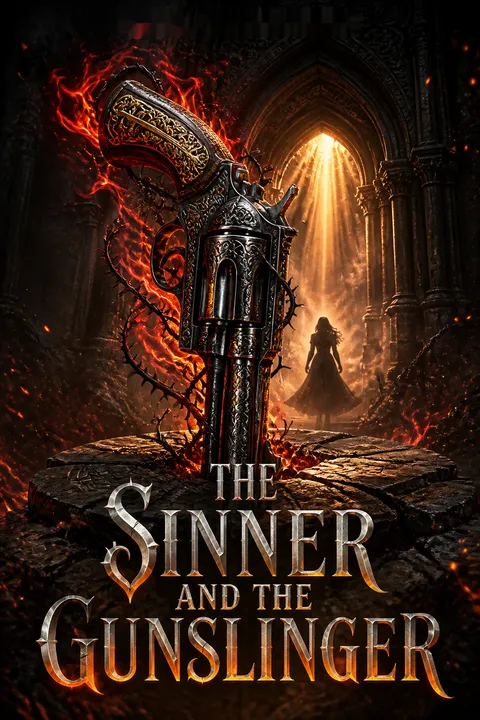


Plot Summary
Prologue
A homeless woman warns a crowded city that war is coming and asks a passerby whether anyone deserves another chance. The clouds swallow the sunlight, her coins scatter into a storm drain, and the question hangs unanswered as the city rushes around her.
The brief encounter frames the approaching apocalypse as more than a battle against demons: it asks whether redemption remains possible for those who have caused harm.
The prologue turns prophecy into a street-level human question. Its warning comes not from a priest or a warrior but from a destitute woman whom the crowd barely notices, linking the coming apocalypse to the people most likely to be overlooked. Her lost coins make the scene materially precarious, while her question about second chances plants the moral problem that will shape both Zeke’s return and the fate of the demon War. The book begins by asking whether redemption is merely promised, or whether someone must choose to offer it.
A Wildcat Finds Her Huckleberry
After a demon kills his baby sister, young Zeke is shuffled through foster homes and branded a murderer because nobody believes what he saw. He recognizes Leila, a new child at the home, as another target for bullies and fights them off when they steal her stuffed bear. Leila answers his kindness with suspicion, but the two gradually become each other’s refuge.
Zeke gives her a red protective bracelet and invents a ritual for promises; she gives him a nickname drawn from their Western films. When fire follows Leila from home to home, their shared fear becomes another reason they cling to routine, one another, and the fragile comfort of her toy, Snuggles.
Their bond begins not with easy trust but with mutual recognition: each child is treated as dangerous because adults cannot explain the frightening events around them. Zeke protects Leila through action, while Leila’s toughness lets her accept care without becoming passive. The bracelet and their promise ritual are small, repeatable forms of safety in lives governed by unreliable adults. Snuggles carries a different kind of security, tying Leila to the parents she never knew. These objects make affection tangible, but they also turn childhood comfort into a source of fear and guilt.
The Promise in the Fire
When fire breaks out at the group home, Zeke finds Leila outside and learns she will not leave without Snuggles. He enters the burning building to retrieve the toy, then realizes the demon that killed his sister may have been following Leila instead. Believing Snuggles draws the creature toward her, he takes the bear and chooses to disappear rather than return to her.
Leila waits for him, certain he promised to come back. Later, Zeke sees a report of another orphan girl killed in a fire and finds the red bracelet in the rubble. Convinced Leila is dead, he sinks into criminal life and hunts demons, never learning that she survived.
Zeke’s defining failure is an act of protection carried out without Leila’s consent. At seventeen, he mistakes secrecy for sacrifice: by making himself appear dead, he hopes to draw danger away from her, but leaves her with the belief that she caused his death. Leila’s repeated experience of being blamed for fires makes that belief especially damaging. The bracelet becomes evidence each character interprets differently, proof of death to Zeke and a discarded charm to Leila. Their separation is therefore built from care, fear, and mistaken certainty rather than indifference.
The Gunslinger Returns
Years later, Leila is a weapons expert among the Hildegard Sisterhood’s Sinners, a group of female demon hunters. Team Saint arrives at their abbey, and she recognizes its gunslinger as Zeke. He fails to recognize her, believing the childhood girl died in the fire, while she sees his failure as another rejection.
Both teams are still reeling from Asmodeus’s escape, a recent demonic attack that killed Sister Prue and the Monsignor, and the war sickness that turned nuns against one another. Thea has healed Zeke with an angelic staff, but the recovered prophecy in Mary Magdalene’s lost gospel says the factions must work together. Leila distrusts the men, and Zeke’s guilt keeps him from explaining himself.
The reunion makes recognition unequal: Leila sees the person who shaped her childhood, while Zeke sees a stranger because grief fixed his memory at the moment he thought she died. Her anger is not simply romantic disappointment; it protects the self she built after being left to carry blame alone. The apocalyptic crisis forces them into proximity before either can repair that history. The recovered gospel also unsettles the institutional assumptions of both teams, making their cooperation necessary even as their personal distrust gives the larger conflict a human face.
A Mission Neither Wants
The teams agree to cooperate while Thea and Wesley search Mary’s gospel for the remaining relics needed to stop the Horsemen. Their research points toward Constantine’s lost helmet and bridle, or, failing that, holy nails that could be forged into a weapon. Dominic and Mercy leave to inspect claimed relics in Italy.
Leila and Zeke are assigned to approach Ludovic, an antiquities collector who may own the helmet, at an illegal poker game. Raven’s vision supports the lead but warns that betrayal is near; she also tells Zeke to be honest with old contacts. Leila resents being paired with him, while Zeke learns from Wesley that the prophecy may require a Saint and a Sinner to fall in love.
The assignment converts prophecy into a practical test: the relic hunt needs the very people who distrust one another to act as partners. Wesley’s concealed interpretation introduces a dangerous ambiguity, because a relationship can become both a genuine attachment and a perceived obligation to fulfill a cosmic design. Leila is not told that part, so Zeke’s developing honesty has an immediate limit. Raven’s warning about truth makes this secrecy particularly charged. Meanwhile, the competing search for holy nails establishes that the team has alternatives, but the collector’s lead makes the road mission their best chance.
Blood at the Last Stop
On the drive toward the poker game, an apparition forces Zeke and Leila off the road. They destroy a possessed biker and discover a nearby bar filled with slaughtered patrons, with only the shaken delivery driver, Pete, alive. Security footage shows Asmodeus killing the customers and using the barmaid’s blood to search the memories of a woman named Sarah’s descendants.
He also meets Lilith, who warns him that the Sinners may have a weapon capable of stopping him. Leila and Zeke erase the footage and leave Pete for the authorities, but Leila briefly considers killing him to protect their identities. Zeke refuses, and they burn the bar to obscure their trail, sharpening the disagreement over what their mission permits.
The bar shifts the threat from rumor to mass violence and gives Asmodeus a method: he can extract ancestral memory through blood. Lilith’s warning confirms that the relic hunt is now a race, while their uneasy exchange shows the demons are not necessarily united. The surviving Pete forces Leila and Zeke to confront different survival ethics. She has learned to treat witnesses as risks; he still recognizes the person behind the risk. Their choice to spare him preserves a moral boundary, though burning the scene complicates any clean distinction between necessary action and wrongdoing.
The Poker Game Burns
Zeke secures entry to the game by giving his old associate Andrei the abbey’s Mustang and accepting a beating; he returns with a black eye and the invitations. Leila enters as Madam Mina, using her dominatrix persona to distract the gamblers and loosen their tongues.
As the pair trade old hurts for renewed desire, the antiquities collector Ludovic boasts that the helmet lies in a temple in Romania’s Carpathian Mountains. Asmodeus arrives with demon-possessed bikers, including Puck, Zeke and Leila’s childhood bully.
When the demon turns the room into a battlefield, Zeke shoots Ludovic before Asmodeus can use him, then consecrates rainwater through his rosary and a blood sigil to drive back the demons. They escape, leaving the collector dead and the relic’s location uncertain.
The poker game makes performance a survival skill: Leila’s practiced persona and Zeke’s criminal contacts gain access to information, but each also risks reducing the pair to roles. Their renewed intimacy grows beside violence rather than after it, so attraction cannot be separated from danger. Zeke’s choice to kill Ludovic is a consequential departure from his stated wish to avoid violence, made to prevent Asmodeus from reaching the man’s memories. The improvised consecration demonstrates that knowledge and faith can function as weapons, but the escape is costly and offers no certainty that their target is real.
Dorothea’s Hidden Arsenal
In a remote Romanian village, innkeeper Orlov welcomes Leila and Zeke and shares local stories about a vanished temple, a monster hunter, and a church near Vlad Țepeș’s former lands. His son Matei connects the tale to pastor Georg Andreas Helwing, whose wife Dorothea may have fought Dracula.
The family’s hidden bunker holds Dorothea’s journal, ammunition, protective herbs, and one bullet engraved with the Romanian word for forgiveness. They explain that the helmet and bridle were made into a holy gun and its bullets, though the gun itself was buried with Dorothea.
Snuggles unexpectedly appears in their cabin. Claudia finds protective Helwinga inside the toy and realizes it was a charm, not a beacon, overturning the story Zeke told himself about taking it from Leila.
The village transforms folklore into an archive maintained by ordinary people rather than official institutions. Dorothea’s history also corrects the assumption that a male pastor alone defeated the monster, linking hidden female labor to the Sisterhood’s own erased past. The bullet marked for forgiveness complicates the relic’s function: the weapon is not simply an instrument of destruction. Snuggles’ protective contents overturn Zeke’s central justification for leaving Leila. His decision may have been loving, but it rested on a false reading of the object, and the family’s discovery lets the childhood symbol become a source of protection again.
The Lie Splits Them
As the village succumbs to war sickness, Orlov’s family stays behind to defend its people while Leila and Zeke race toward the church. A collision leaves them trapped in their truck until Flauros, the demon who killed Zeke’s sister, drags Leila out. Asmodeus shows her messages proving that Wesley and Zeke knew the prophecy predicted romantic pairings between Saints and Sinners, and that Wesley urged Zeke to use the opportunity with her.
Zeke admits he withheld this. The shock widens the supernatural breach, allowing Flauros to manifest fully. Zeke tackles him over a steep slope, then survives the fall as Asmodeus turns on the demon. Leila reaches Zeke and chooses to believe his love, but Asmodeus sets the church ablaze.
Asmodeus’s attack succeeds first as an interpretation: he turns a real concealment into evidence that all affection was strategic. The prophecy has not created Leila and Zeke’s feelings, but Zeke’s silence gives it power to contaminate them. His tackle is an action rather than an explanation, placing himself between Leila and the demon who haunted their childhood. Leila’s decision to trust him does not erase the lie; it distinguishes the truth of his feelings from the pressure of prophecy. The burning church then forces that repaired trust into immediate physical danger.
The Bullet of Forgiveness
Protected by the Helwinga coating and Snuggles, Leila crosses the flames and descends into Dorothea’s crypt while Asmodeus searches the sarcophagus. A mural of a Sinner points her to a loose brick concealing the holy gun. She loads the last forgiveness bullet and fires at Asmodeus, but the wound does not kill him.
Instead, it forces guilt and human feeling into the demon, whose black eyes flicker toward brown as he begs her to end his pain. Leila refuses to execute him and leaves him to endure what he has done. The choice fulfills the relic’s deeper purpose: Asmodeus remains a demon, but no longer has the shelter of a soulless conscience.
The climax resolves the book’s central moral question through a refusal to confuse justice with killing. The gun is lethal, yet its defining bullet produces remorse rather than a clean death. That outcome makes forgiveness neither absolution nor emotional comfort; Asmodeus must experience responsibility without being released from his nature or history. Leila’s fear of fire is overcome through learned skill, communal knowledge, and Snuggles’ protection, not through a sudden disappearance of trauma. She succeeds because she can act while afraid, and because the relic’s meaning is more complex than its force.
Ash at the Supper Table
Leila and the injured Zeke return to the abbey, where Mercy confronts Leila for hiding their history and warns that the secrets have isolated her. Mercy later confesses her compulsive sexual urges and self-punishment to Father Angelotti; he offers guidance without calling desire itself evil.
At the team’s dinner, Leila admits that the prophecy predicts Saint-Sinner romances and acknowledges that she and Zeke concealed their past. Wesley confirms the interpretation, while Cisco’s silence reveals that the Vatican’s Entity is coming to dismantle the Sisterhood. Before the group can decide what to do, Leila’s cake tastes like ash to everyone. They recognize the new Horseman’s influence: Famine has begun.
The return does not produce a simple victory feast. Leila’s disclosure repairs one breach while exposing another institutional threat, and Mercy’s confession shows that the need for trust extends beyond the central couple. Cisco’s silence carries the weight of divided loyalties, so the group’s cooperation remains provisional. The ruined cake is an especially intimate signal of catastrophe: an ordinary act of care becomes tasteless before anyone sees a battlefield. Famine thus enters through deprivation of pleasure and nourishment, suggesting that the apocalypse can attack the shared rituals that make survival feel worth the effort.
Epilogue
In a deserted alley, a homeless woman is too weak to call out for help. Passersby ignore her while food lies rotting nearby. A forgotten sign nearby warns that a starving soul may be feeding evil. The warning makes the new Horseman’s arrival immediate and bodily: hunger has begun to spread, and the world’s abundance is no protection against it.
The epilogue turns Famine into an inversion of ordinary scarcity. Food exists, but care and access have vanished; the woman’s hunger is therefore social as well as physical. The decaying food beside her makes abundance look obscene rather than reassuring. Its warning also gives the new threat a moral dimension without explaining it away: evil feeds where people are abandoned. After the protagonists have learned to rely on shared labor and protection, the epilogue suggests that the next trial will target the bonds that make sustenance possible.
Analysis
The novel links apocalyptic danger to the everyday mechanics of trust. Its supernatural rules repeatedly operate through relationships: Asmodeus spreads war by turning people against one another, the prophecy requires rival groups to cooperate, and Zeke’s attempt to protect Leila by disappearing instead leaves her with a lasting conviction that she caused his death. The same pattern scales outward. Wesley withholds information to secure a desired alliance, while the Vatican’s hidden authority threatens to dismantle the Sisterhood even as it claims to serve a common cause. In this world, good intentions do not cancel the consequences of secrecy.
Objects make that argument intimate. Zeke’s rosary can help sanctify water; Leila’s toy contains a protective plant; a childhood bracelet becomes proof of a death neither character understands correctly. Their meanings are not fixed by tradition or appearance. They change when people examine what has been hidden inside them. The holy gun completes this logic: it does not simply destroy Asmodeus but forces him to experience the guilt he had escaped. Mercy becomes more than pardon, because it leaves responsibility intact.
Leila’s movement is from control toward chosen vulnerability. Her fire checks, weapons training, and assassin persona have helped her survive, but they cannot answer whether she is evil or whether she wants a life beyond the Sisterhood. Zeke must learn a parallel lesson: protection without honesty repeats the harm it aims to prevent. Their love matters not because it fulfills prophecy, but because each must choose it with knowledge of the other’s failures. The final discovery of Famine prevents triumph from becoming complacency. The couple has repaired one bond, but the teams still face an institution that may divide them and a new Horseman who attacks the conditions of care themselves.
Review Summary
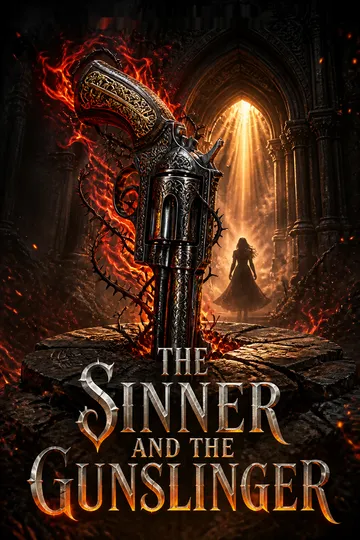
The Sinner and the Gunslinger receives an overall rating of 4.26/5 stars. Readers praise the second-chance childhood friends-to-lovers romance between Leila and Zeke, two orphans reunited after believing each other dead. Most appreciate the fast-paced plot mixing demons, prophecies, and apocalyptic themes with Supernatural/Buffy vibes. The character development and spicy scenes earn acclaim, though some find the romance lacks intensity compared to book one. Asmodeus stands out as a favorite antagonist. Reviewers eagerly anticipate Mercy and Cisco's story next, praising the series' strong female characters and found family dynamics.
People Also Read






Characters
Leila
The fire-haunted weapons expertLeila is a Sinner of the Hildegard Sisterhood, trained in weapons, seduction, and survival. As a child, she was repeatedly blamed for fires she did not understand, and Zeke’s disappearance left her convinced that her need for Snuggles had cost her the person she trusted most. She manages fear through routines, especially nightly fire checks, and meets vulnerability with anger or professional distance. Her competence is real, but it has also become a way to avoid asking what she wants outside the Sisterhood. Zeke’s return forces her to weigh self-protection against trust, while the relic hunt tests whether she can act from her own judgment rather than from the role others assign her.
Zeke
The guilt-haunted gunslingerZeke Cohen is a demon hunter, sharpshooter, and former criminal who once built a life among arms dealers after believing Leila had died. He carries guilt over his baby sister’s death and over the way he abandoned Leila in the name of protecting her. Humor, cowboy bravado, and flirtation help him hide fear, illness, and shame. His healing by Thea’s relic gives him another chance at life, but survival does not erase the damage he caused or the violence he once embraced. Zeke wants to keep Leila safe, yet his instinct to make decisions for her can become another form of secrecy. His challenge is to protect without controlling and to accept consequences rather than disappear.
Asmodeus
The demon prince of WarAsmodeus is a powerful demon prince whose escape from imprisonment brings the war sickness into the human world. He can manipulate conflict, possess hosts, and use blood to reach into ancestral memories. Beneath his polished charm and appetite for gambling and spectacle is a being shaped by vengeance and rivalry. He rejects the idea that he belongs to a role chosen for him, even as Lilith treats him as a piece in her larger design. His appetite for control makes him dangerous, while his history with Lilith suggests that even a demon prince can be manipulated by old grievances.
Wesley
The scholar hiding a secretWesley is a British scholar and member of Team Saint whose research into Mary Magdalene’s gospel makes the relic hunt possible. He believes the Saints and Sinners must work together and trusts his relationship with Thea as evidence that the prophecy’s divisions can be mended. His intelligence is matched by a willingness to manipulate events when he thinks the outcome justifies it. That habit strains his friendships and complicates the very trust he wants the teams to build.
Thea
The relic’s healing bearerThea is a Sinner who can wield an angelic staff, heal serious injuries, and help interpret Mary Magdalene’s recovered gospel. Her knowledge and calm decisiveness draw the other Sinners toward cooperation, although her increasing leadership sometimes makes them feel overruled. She loves Wesley and believes their relationship matters to the struggle against the apocalypse. Thea’s challenge is to carry extraordinary responsibility without assuming that knowledge gives her the right to decide what others should know.
Mercy
The restless Sinner leaderMercy is the redheaded leader of Leila’s Sinner team, a formidable assassin whose confidence in her sexuality hides a need for acceptance. The arrival of Team Saint disrupts the freedoms and routines that once let her manage her compulsions. She is used to taking charge, but Thea’s growing authority leaves her uncertain about her place. Mercy’s bluntness can sound like provocation, yet she is alert to the emotional costs of secrecy and wants her friends to treat her as more than a weapon or an appetite.
Cisco
The exorcist with divided loyaltiesFather Francisco Angelotti, usually called Cisco, is Team Saint’s exorcist and a former Mafia enforcer. His ability to sense evil and his hard-earned faith make him a formidable guide through possession and guilt. He recognizes the human complexity behind the Sinners’ choices, even while remaining loyal to the Church and its institutions. His past leaves him wary of easy absolution, and his authority often masks conflicts he would rather carry alone.
Dominic
The steadfast SaintDominic is a physically imposing member of Team Saint, marked by a history of violence and a deep commitment to protecting vulnerable people. He often speaks less than Wesley or Cisco, but his actions reveal compassion, especially toward the redeemed demon Jinx. Dominic believes people can change, though he is cautious about how much damage a lifetime of choices can leave behind.
Raven
The troubled seerRaven is a Sinner whose visions offer the group crucial warnings, though they arrive unpredictably and can leave her with severe migraines. She tends to keep information to herself until she understands what it means, a habit others may read as coldness. Her insight helps direct the mission, but she does not claim certainty where she has none. Raven’s caution reflects the burden of seeing possible futures without being able to control them.
Tawny
The hopeful SinnerTawny is a member of Leila’s team, known for optimism that persists even when the Sisterhood is exhausted and under threat. She contributes practical help, including research and intelligence gathering, but her warmth can make her seem less formidable than she is. Tawny’s place among the Sinners shows that their work depends on more than combat; morale and everyday care matter too.
Lilith
The ancient demon matriarchLilith is the Mother of Demons, an ancient power pursuing her own designs while the gates of Hell remain sealed. She communicates through possessed human hosts and treats information as leverage. Her history with Asmodeus is marked by rivalry, resentment, and strategic patience. Lilith’s presence unsettles the assumption that the demonic forces share one purpose, making her as dangerous for what she withholds as for what she reveals.
Flauros
The fire-eyed demonFlauros is the fire demon associated with the childhood deaths and fires that haunt Zeke and Leila. He appears through human hosts, where his burning eyes and predatory manner signal the danger beneath the surface. His connection to both characters’ pasts makes him more than a battlefield enemy: he embodies the fear and guilt that have shaped their choices since childhood.
The Reverend Mother
The Sisterhood’s elderThe Reverend Mother leads the Hildegard Sisterhood from the abbey and protects its members with a mix of discipline, hard-earned wisdom, and maternal concern. She suspends Sinner missions while Lilith’s threat remains active and insists that the teams cooperate. Her age and physical frailty do not weaken her authority; she can still quiet a room with a single strike of her cane.
Jinx
The redeemed little demonJinx is a small, scaled ex-demon who was healed by Thea and now attaches herself to Zeke. Her playful curiosity and fondness for treats make her an unexpected companion in the abbey. Jinx complicates the team’s habit of dividing the world into the innocent and the irredeemable.
Puck
The childhood bullyPuck is the redheaded bully who tormented Leila at the group home and repeatedly clashed with Zeke. His cruelty made Zeke’s protection of Leila necessary, while his presence in their later lives ties their supernatural danger to the violence of their childhood.
Orlov
The village keeperOrlov is the warm, boisterous innkeeper of the Romanian village that preserves the story of Dorothea Helwing. He welcomes Leila and Zeke, shares local folklore, and helps connect their relic hunt to the family’s hidden records.
Ludovic
The antiquities collectorLudovic is a wealthy collector whose claims about an ancient helmet give Leila and Zeke a lead to pursue. His connection to the illegal poker game places his antiquities business among criminals, gamblers, and people willing to use violence to protect their secrets.
Dorothea Helwing
The forgotten demon hunterDorothea Helwing was a historical monster hunter whose journal and work survive in the Romanian village’s care. Her story is obscured by the reputation of her husband, Georg Andreas Helwing, but the family’s records preserve her knowledge of demons, protective plants, and weapons.
Prue
The lost Sinner sisterPrue is a Sinner whose recent loss weighs heavily on the Sisterhood when the story begins. Her absence contributes to the team’s exhaustion and makes the danger of the apocalypse personal rather than theoretical.
Plot Devices
Mary Magdalene’s Gospel
A prophecy with consequencesThe recovered gospel provides the framework for the relic hunt and the alliance between the Saints and Sinners. Its passages predict divine relics, Horsemen, and the need for people from both factions to work together. The manuscript also challenges the Church’s accepted history by presenting Mary Magdalene as a favored apostle and prophet. Because its language is difficult to translate, characters must interpret its clues rather than follow a simple set of instructions. Its concealed implications can guide the team, but they also become a source of mistrust when Wesley shares some readings with Zeke and keeps them from Leila.
The Angelic Staff
Healing with a costThea’s staff heals ailments and injuries that ordinary medicine cannot treat, including Zeke’s fatal illness and the demonic war sickness affecting the nuns. Only Thea can properly wield it, making her indispensable to the Sisterhood’s recovery. Its power does not solve the larger conflict: healing individual victims cannot stop Asmodeus or protect every community he targets. The staff therefore serves as both a miracle and a limit, reminding the teams that they still need to find and use the other relics.
Snuggles and the Bracelet
Childhood protection misreadThe stuffed bear and red evil-eye bracelet connect Leila and Zeke’s childhood to their adult mission. Zeke believes Snuggles attracts the fire demon, so he takes it when he disappears. Leila keeps the bracelet briefly, then gives it away because she feels responsible for Zeke’s presumed death. In Romania, Claudia discovers protective Helwinga inside the bear, revealing that Snuggles was a charm rather than a beacon. The objects show how fear can turn protective gestures into sources of guilt, while their return helps the characters reinterpret what happened.
Dorothea’s Holy Gun
A weapon that demands mercyThe helmet and bridle of prophecy become the parts of a holy gun, with a final bullet marked for forgiveness. Dorothea Helwing’s journal and the Romanian family’s inherited records establish the weapon’s history before Leila finds it in the church crypt. The relic can wound Asmodeus, but its decisive effect is to force guilt and human feeling upon him rather than simply erase him. Its meaning joins violence to accountability: the gun gives Leila power over the demon, while the bullet makes her choose what that power should accomplish.
The War Sickness
Conflict made contagiousAsmodeus spreads a supernatural compulsion to fight, turning ordinary people and nuns against one another. The sickness makes the Horseman’s power visible before he appears in person, and its effects can persist until Thea’s staff heals the victims. It also interferes with the teams’ ability to cooperate: suspicion and aggression are precisely the conditions that threaten their alliance. The attacks at the abbey, bar, village, and poker game raise the cost of delay while showing that the apocalypse can spread through human relationships as well as through physical destruction.
The Sinner Sisterhood Series Series
About the Author


Download PDF
Download EPUB
.epub digital book format is ideal for reading ebooks on phones, tablets, and e-readers.








