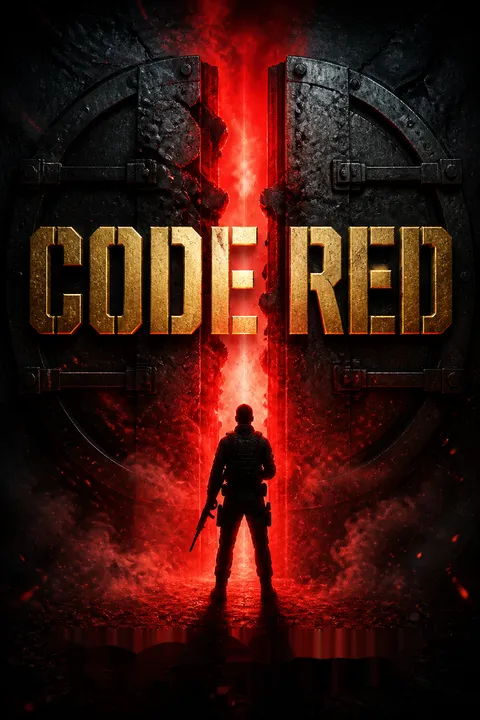


Plot Summary
Prologue
At Salerno’s port, former Islamic State fighter Absaar Mousa watches a shipment of fifteen metric tons of a new captagon formulation move toward its European distribution network. Italian authorities seize it before it can be collected.
The driver, Ja’far Saeed, responds by ramming a police vehicle and detonating a bomb in his truck, turning the dock into a firestorm. Mousa concludes that someone in the shadowy organization financing him has been compromised. The seizure is a defeat, but the attack makes clear that this drug operation is willing to kill for its foothold in Europe.
The opening makes the drug trade visible as a battlefield before Mitch Rapp enters the story. Mousa’s religious certainty gives his recruits a language for violence, while the shipment’s carefully built network suggests that this is more than an isolated extremist plot. Saeed’s attack converts a failed delivery into public terror, a consequence that will shape how European authorities interpret the drug. The prologue also plants the story’s central disguise: a narcotic presented as commerce may actually be a weapon, and the people who appear to control it may not be its true architects.
A Village Too Quiet
In Afghanistan, Mitch Rapp returns to extract two Americans still held after the US withdrawal. Irene Kennedy’s CIA has recovered eight hostages through payments, but this family refuses a million-dollar offer.
Rapp suspects that Cook loyalists inside the Agency have encouraged the captors to kill him, so he stages a noisy assault on an abandoned village a mile away. The real village relaxes around its fire, letting Scott Coleman slip inside and free the hostages from an explosive vest.
A young captor raises his rifle, Charlie Wicker kills him, and the vest detonates as the Americans escape. Rapp evades the pursuing fighters and refuses a Reaper strike that would endanger their families. He leaves with the hostages, but the mission confirms that betrayal at home now shadows his work abroad.
The rescue establishes Rapp’s tactical intelligence and the limits he places on it. He can manipulate the Afghan fighters’ expectations, but he refuses to treat their families as acceptable collateral once the operation turns violent. That restraint is not a retreat from force: Wicker’s shot and Rapp’s own escape show how quickly he will act when threatened. The deeper breach is political. Rapp can identify an enemy in the village, yet the more consequential threat comes from officials who exploit that enemy to target him. The mission therefore shifts his idea of danger from an armed front to compromised institutions.
Home, With a Debt
Back at his Virginia home, Rapp finds Claudia Gould, her daughter Anna, and the familiar circle of former operators, but ordinary domestic life still feels newly fragile. President Terrance Adams thanks him for rescuing the hostages, while Kennedy continues trying to remove Anthony Cook’s allies from the CIA.
Soon afterward, Rapp receives a message from Damian Losa, the Mexican crime lord who helped him locate Gustavo Marroqui after Marroqui’s hit squad targeted Claudia in South Africa. Losa’s help kept Claudia alive, and Rapp had promised to repay him. Claudia warns that Losa will not ask for a trivial favor. Rapp accepts the meeting anyway, reasoning that a debt is still a debt, even when the creditor is a criminal with immense power.
The homecoming places Rapp between two kinds of obligation. Anna’s spontaneous affection and Claudia’s insistence on a shared life offer him a reason to limit his exposure to danger; his promise to Losa gives him a reason to leave again. Neither obligation is abstract. Marroqui’s attack made Losa’s intervention personal, while Anna’s dependence makes Rapp’s absence costly. His decision exposes a durable feature of his psychology: he treats promises as binding even when the circumstances that produced them have changed. The book’s central conflict grows from this admirable discipline becoming a vulnerability that another strategist can exploit.
The Canadian Envoy
In Paris, Losa explains that Syria’s new captagon shipment threatens his European narcotics empire. The formula appears closer to the banned pharmaceutical drug than the cheap stimulant commonly sold under that name, and Losa’s chemists cannot reproduce it at a profit.
He wants Rapp to discover who makes it, how it works, and whether a deal is possible. Rapp agrees, though he has little experience in the Syrian trade and expects to serve as a disposable intermediary. Losa’s people transform him into Matthieu Fournier, a wealthy Canadian attorney with convincing documents, accounts, and a Toronto life.
Rather than fly openly to Damascus, Rapp is sent through Turkey with smugglers, carrying the polished identity of a harmless negotiator into a country where his real skills may be more useful than his cover.
The Canadian identity is more than a disguise; it imposes a role whose requirements conflict with Rapp’s instincts. He is asked to negotiate, gather facts, and avoid appearing dangerous, even though his training makes him most effective when he can control a threat directly. Losa’s careful preparation shows that he understands the value of perception, while Rapp’s acceptance shows how readily he turns himself into an instrument for someone else’s plan. Their bargain is therefore asymmetrical from the start: Losa controls the assignment and its information, while Rapp assumes the physical risk. The polished cover conceals not only Rapp, but the imbalance between them.
The Ridge Ambush
Near the Turkish border, Rapp crosses Syria with two smugglers, Nijaz and Ahmet. He spots a suspicious group below their ridge and realizes the rival traffickers have lured them into an ambush. Gunfire kills Ahmet.
Rapp disarms the panicking Nijaz, uses him to draw the attackers’ fire, then circles behind and kills both gunmen. He makes Nijaz describe the encounter as a fight between smugglers, hiding that the Canadian attorney did the killing. Rapp reaches Idlib and meets Dr. Ismail Faadin, a museum director who entered smuggling to keep his family alive.
Faadin can arrange a meeting with government-linked traffickers, but warns that Losa’s Syrian network has been dismantled and loyalties shift with survival. He also reveals that the European captagon operation belongs to the Russians, not Damascus.
Rapp’s first success in Syria is also a measure of how little his cover can protect him. The ambush forces him to reveal the operator beneath the attorney, then to conceal that revelation from the only guide he has left. Nijaz’s fear is not simply cowardice; in a landscape where family safety can depend on powerful criminal patrons, speaking accurately can be dangerous. Faadin offers a more complicated picture of collaboration. He is neither a loyal cartel soldier nor a free agent, but a man whose choices have narrowed under war and poverty. The discovery of Russian involvement changes the mission from market research into an encounter with state power.
Saraqib’s Broken Meeting
Faadin takes Rapp to Saraqib to meet Rahim Suleiman, a former Losa associate now moving narcotics for Syrian military officers. Rapp offers Losa’s superior European distribution network, but Suleiman stalls instead of committing.
His guard turns a weapon on Faadin, who is killed, while gunfire spreads through the building and the surrounding streets. Rapp overpowers the guard and Suleiman, but the weakened wall gives way during their struggle; Suleiman falls from the building, and Rapp survives by catching exposed rebar.
Syrian forces flood the area, while enraged residents mistake the raid for an attempt to retake the city. To stop the confrontation from becoming a massacre, Rapp gives himself up as the harmless Canadian lawyer. The soldiers carry him away, leaving Saraqib in open revolt.
The meeting fails because Rapp mistakes access for influence. Suleiman can relay a proposal but cannot decide whether the Russians or Syrians should accept it, and the armed choreography around him makes clear that negotiation is only one layer of the encounter. Faadin’s death gives the cost a human scale: he entered illicit work under pressure, yet is still consumed by forces larger than his bargains. Rapp’s surrender is a rare use of vulnerability as protection. By allowing the soldiers to believe in Fournier, he creates a chance to prevent civilians from paying for his escape. His choice preserves lives in the moment but places him inside the machinery he hoped to investigate.
The Lawyer Escapes
Syrian soldiers take Rapp to a remote farm, where he watches them kill a family that has emerged unarmed from a small house. They order him to move the bodies. The killing strips away any remaining pretense that his captors are merely escorting a negotiator.
When the soldiers threaten him, Rapp shoots both and gives the wounded driver a chance to run before killing him at the wall. He dresses one corpse in his expensive suit and arranges it to look like the prisoner, then waits for the Russian mercenaries sent to collect Fournier.
He kills the first two inside the house and the third outside, takes their vehicle, and reaches Aleppo. From there, he contacts Losa, reports Faadin’s death, and warns that Russia, not Syria, is driving the operation.
The farmhouse is the point at which Rapp’s invented role becomes morally untenable. He has tried to pass as a noncombatant, but the family’s execution makes neutrality impossible, and his retaliation is both tactical and personal. His methodical disguise of the corpse shows how completely he can convert violence into a story that others will accept. That skill buys him time, yet it also reinforces his isolation: no institution is rescuing him, and no ally can be assumed honest. His report to Losa seems to restore a working relationship, but Rapp’s dependence on the crime lord’s information has not disappeared. It has simply become more dangerous.
A Phone Left Behind
After Losa urges him to keep pursuing contact with the Russians, Rapp grows suspicious that his employer wants him delivered to them. He leaves a phone in the bag of a Syrian man who resembles him and watches Russian agents raid the man’s apartment.
The capture confirms that Losa supplied the phone’s location. Rapp decides the debt is paid and asks Kennedy for an exit route. She arranges a crossing near Quneitra, where Israeli personnel initially wave him through. Instead of reaching safety, Rapp is seized by an Israeli special-operations team.
Mossad chief Ben Friedman explains that Russia has asked Israel to hand over a Canadian working for Losa, and Israel’s prime minister wants a deal over the Golan Heights. Friedman sends Rapp through a tunnel into Russian custody.
Rapp’s decoy is a test built to answer a question that trust alone cannot settle. By placing the phone where Losa’s contacts can expose it, he turns the rival’s surveillance system into evidence of betrayal. The result is not simply that Rapp leaves a bad employer; he discovers that national institutions can make the same cold calculation. Israel’s bargain converts his identity into diplomatic currency, while Friedman’s personal unease cannot alter the decision. The scene broadens the book’s moral landscape without equating every actor. Losa, the Israeli government, and the Russians all trade in leverage, but Rapp still distinguishes between a deal he consented to and a handover that turns him into property.
Semenov’s Drug Factory
At a remote Syrian compound, Rapp meets Aleksandr Semenov, a Russian intelligence strategist posing as a general. Semenov wants the Losa organization, especially its American and Latin American reach, and questions Rapp about his employer.
He explains that the new captagon is designed for dependence and lasting psychological damage, not ordinary profit. Russian scientists test it on prisoners and refugee-camp detainees, while Semenov plans to exploit existing prejudice against Muslim distributors in Europe and Latino networks in the United States.
Rapp refuses to provide useful information. When Semenov’s people move him by road toward the coast, Rapp recognizes that the transfer offers his first real chance to escape. The drug is no longer a cartel competitor’s product; it is an instrument in a Russian campaign against Western societies.
Semenov’s revelation changes the scale of the story because it makes addiction part of a deliberate political design. The victims are not incidental casualties of commerce; they are selected subjects in a program meant to damage both individual minds and public institutions. Semenov’s intelligence lies in treating social division as infrastructure that can be exploited as efficiently as a transport network. Rapp’s refusal to help him is not merely loyalty to Losa, whom he no longer trusts. It reflects recognition that the threat reaches people who have no role in the bargain. That recognition gives Rapp a reason to act beyond the limits of his original assignment.
The Prisoner Who Returned
During the drive toward the Russian coast, Rapp locks the SUV’s brakes on a mountain road, sends vehicles and riders crashing, and fights his way down the slope. He kills one pursuer, wounds another, and escapes into the forest before reaching a village of anti-government fighters.
There, he learns that an imprisoned engineer named Kadir escaped from Semenov’s compound. Kadir lives alone, mentally damaged and consumed by the belief that God brought him back to destroy the Russians.
He tells Rapp that prisoners were addicted, tested, and eventually taken into the desert to be killed. Rapp had intended to leave Syria through Turkey or Israel, but Kadir’s testimony changes his decision. He contacts Kennedy and argues that Semenov’s facility must be attacked before its drug can spread further.
Kadir makes the weapon’s consequences legible through a life rather than a briefing. His broken memory, isolation, and violent purpose show how the experiment continues after the drug is withdrawn: the damage has become a condition of existence. Rapp does not mistake Kadir’s conviction for proof that every detail is reliable, but he recognizes enough factual coherence to investigate. This encounter also interrupts Rapp’s instinct to escape once a mission becomes too costly. His family has made self-preservation more meaningful, yet the knowledge of what Semenov is doing makes departure feel like a different kind of abandonment. Rapp’s decision to return is therefore neither simple heroism nor habit; it is a judgment about who will suffer if he leaves.
Building the Way In
Kennedy keeps Claudia and Anna out of reach while Scott Coleman brings experienced operators and regional allies into Syria. The team studies satellite images and Rapp’s memories of Semenov’s compound, then waits for a Russian transport carrying prisoners to leave a Damascus-area jail.
Kadir provides the crucial engineering detail: the old hospital’s underground garage has failing supports, and a truck carrying roughly one hundred kilograms of explosives could bring part of it down.
Rapp assigns Kadir to drive the truck, knowing the plan depends on his willingness to die. Coleman questions the risk, but Rapp insists that the demolition will reduce the guards’ advantage and open a route to Semenov’s newer wing. They prepare a false Russian transport and position equipment along its route.
The plan is built from compromised knowledge. Rapp has only fragments from his brief captivity, Kadir remembers the old hospital from the inside, and the team must infer security patterns from satellite imagery. Rather than pretending uncertainty can be eliminated, Coleman and Rapp convert it into a sequence of tasks with narrow responsibilities. Kadir’s role is the plan’s moral fault line. His willingness to sacrifice himself is entangled with trauma and a damaged belief that death will restore purpose. Rapp accepts that sacrifice because the mission demands it, but his hesitation reveals a new discomfort: he is no longer merely risking himself. He is organizing another person’s death as a tactical necessity.
Fire Under the Hospital
Rapp’s team ambushes the prisoner transport on a dark road, replaces its wheels and windshield, and hides the prisoners rather than killing them. Kadir drives the disguised truck through Semenov’s gate.
After Rapp shoots the guard, Kadir detonates the explosives in the underground garage, collapsing part of the old hospital and killing himself. The blast cuts power and communications. The team destroys the guard towers, fights through tear gas and smoke, and blocks Russian personnel from escaping.
Rapp enters Semenov’s glass-walled quarters through a broken window, kills the wounded guard, and drags Semenov out on a rope. Coleman pilots the Russian helicopter to the Mediterranean, where the team transfers to a boat and forces Semenov to swim after them. They escape with one wounded operator and their prisoner.
The compound assault turns the earlier details into consequences: Kadir’s engineering knowledge creates the breach, the truck disguise defeats routine security, and the destroyed communications prevent a rapid response. Yet the operation’s success cannot make its cost abstract. Kadir dies at the point where his technical knowledge becomes indispensable, fulfilling his chosen role while leaving Rapp responsible for having planned it. The extraction also reverses Semenov’s carefully controlled world. The strategist who used prisoners as disposable material becomes a captive dependent on his enemies for survival. Rapp’s capture rather than killing of Semenov preserves the possibility of evidence and intelligence, but it also begins a new problem: what justice means when ordinary legal channels cannot reach the man.
The Debt Comes Due
On Cyprus, Rapp forces Semenov to record a confession describing the drug program, its prisoners, and the Russian plan to exploit ethnic divisions in Europe and America. The recording and supporting evidence reach the public, putting pressure on Moscow and Damascus; the operation’s surviving team is gradually extracted.
Rapp then calls Losa, who argues that Rapp acted for his own purposes and has made the cartel a Russian target. Rapp answers that Losa first arranged for him to be captured.
Their call reveals that Rapp is in Prague, where Losa has been hiding. Rapp leaves a silenced pistol in Losa’s study as a warning, then withdraws without killing him. Losa cancels his planned flight. Their original debt is settled, but neither man mistakes the uneasy restraint for renewed trust.
The resolution does not restore a clean moral order. Semenov’s recorded confession exposes a state operation, but Rapp has obtained it through an unauthorized assault and coercion. The evidence matters because it makes the victims and the strategy harder to erase, not because it guarantees that institutions will respond adequately. Rapp’s final exchange with Losa is similarly unresolved by design. He does not kill the man who betrayed him, yet leaves a weapon where Losa will understand its meaning. Restraint here is not forgiveness. It is a boundary: Rapp refuses to let the debt dictate the next act, while ensuring Losa understands that the relationship has changed.
Epilogue
Back in Virginia, Rapp finds Claudia and Anna home from a horse-filled stay in New York. The team has dispersed safely, while Kennedy keeps Semenov in a remote Latvian compound, where he is supplying intelligence on Russian operations. Losa remains in Prague under CIA surveillance as Russia struggles to respond to the exposure of its captagon program.
Claudia asks whether their debt to Losa is settled; Rapp says it is. Anna discovers the custom mountain bike he built for her and races it across the yard. Rapp has returned to the life he once treated as an interruption, though neither he nor Claudia believes danger has disappeared.
The ending returns Rapp to the domestic details that made his departure costly: Claudia’s watchfulness, Anna’s excitement, and the small promises he has been postponing. The bike is not simply a reward after violence. Rapp built it with unusual care, turning the mechanical precision of his work into a gift that lets Anna move freely. His answer about Losa closes the obligation without pretending that danger has ended. Meanwhile, Semenov’s intelligence is being used by the same institutions he attacked, a pragmatic outcome that complicates the idea of justice. Rapp comes home, but the book leaves the larger political contest unsettled.
Analysis
Code Red treats organized crime, intelligence work, and statecraft as rival systems of leverage rather than cleanly separated moral worlds. Losa wants a stable market; Semenov wants instability that can be converted into political power; Rapp wants to keep both men from turning other people into expendable pieces. Their conflict is not simply about who controls a drug. It is about whether the drug is a commodity, a weapon, or both. Semenov’s plan succeeds because it joins biological dependence to social prejudice. The captagon damages individual minds, while its distribution channels give frightened populations someone convenient to blame.
The book is also sharply interested in the limits of institutional loyalty. Rapp is betrayed by people inside the CIA, then treated as a bargaining chip by Israel, and later endangered by the criminal benefactor whose debt he has accepted. These betrayals do not make every commitment meaningless. Kennedy’s support, Coleman’s field judgment, and Rapp’s bond with Claudia and Anna remain sources of trust. Instead, the story distinguishes loyalty from obedience: a relationship earns trust through action, while an institution may demand sacrifice without offering protection.
Rapp’s character changes less by abandoning violence than by reconsidering what violence is for. He refuses an airstrike that could kill Afghan families, risks himself to stop a crowd from being crushed in Saraqib, and returns to Syria after learning what Semenov’s prisoners endured. His restraint is selective, not pacifist. He can kill without hesitation when faced with immediate danger, but increasingly questions who benefits from his actions and who pays their price. Kadir makes that question painful because the operation depends on a wounded man’s voluntary death.
The conclusion offers disclosure rather than justice. Semenov’s confession makes the operation harder to deny, and his captured expertise may help defend against future attacks, but the machinery that produced him remains. Rapp’s final warning to Losa similarly establishes a boundary without reconciliation. The story ends with home restored as a meaningful destination, not as a guarantee that the world outside has become safe.
Review Summary
Code Red receives mostly positive reviews, with an average rating of 4.41/5. Readers praise the action-packed plot, character development, and Mills' ability to continue Flynn's legacy. The story follows Mitch Rapp's mission in Syria, uncovering a Russian plot involving a dangerous new drug. Some criticize the slow start and divergence from Rapp's typical persona. Many express bittersweet sentiments about this being Mills' last Mitch Rapp novel, anticipating the series' future under a new author.
People Also Read








Characters
Mitch Rapp
Reluctant family manA veteran CIA operative whose instinct is to move toward danger when other people are threatened. Rapp reads terrain and human behavior with exceptional speed, but distrusts the political machinery that directs his work. His relationship with Claudia and Anna has given his choices a more intimate cost: he now has people he wants to return to, not merely causes to serve. He remains capable of extreme violence, yet increasingly questions whether survival, loyalty, and duty can be balanced when institutions exploit all three. As Matthieu Fournier, he must perform harmlessness while privately calculating how to stay alive.
Damian Losa
Cartel empire builderA polished and calculating Mexican crime lord who has built a global criminal empire by treating expertise, information, and loyalty as scarce resources. Losa’s wealth does not erase his connection to his modest upbringing; small rituals, such as preparing lime for a drink, return him to memories of his mother’s kitchen. He values stability because it protects his business, and prefers negotiation when it can preserve his position. Beneath the elegance sits a hard pragmatist who measures relationships through obligations and leverage. His long familiarity with Rapp gives their dealings an unusually personal dimension, but never makes Losa’s motives easy to trust.
Aleksandr Semenov
Architect of disruptionA gifted Russian intelligence strategist who believes power is most effective when it can be applied without a conventional battlefield. Semenov studies social weakness as carefully as technology, using disinformation, political interference, and covert networks to undermine opponents. He is ambitious, self-regarding, and convinced that his creativity distinguishes him from the conventional military culture he despises. His Syrian posting is both a constraint and an opportunity: it removes him from Moscow while giving him room to pursue a dangerous new project. Semenov’s confidence rests on his ability to anticipate other people, a strength that also makes him vulnerable to underestimating them.
Irene Kennedy
CIA power brokerThe CIA director and Rapp’s longtime operational ally, Kennedy is a patient political strategist who understands that the Agency’s dangers can come from inside as well as abroad. She is trying to remove the influence of former president Anthony Cook’s loyalists while rebuilding trust in a damaged institution. Kennedy can marshal intelligence, people, and diplomatic contacts, but must constantly weigh the consequences of exposing them. Her bond with Rapp is built on years of shared risk and blunt honesty. She supports him without pretending she can control his decisions, and her confidence in him is matched by a clear-eyed awareness of what his missions cost.
Claudia Gould
Rapp’s grounded partnerRapp’s partner, Anna’s mother, and a former logistical specialist in the world of private assassination. Claudia is practical, observant, and far less sheltered by Rapp’s secrecy than he might wish. She understands the language of operations and recognizes when a supposedly simple favor carries hidden risk. Her relationship with Rapp works because neither expects the other to arrive without a past; they protect a shared home while allowing each other a degree of independence. Claudia’s concern for Anna gives her a steady center, but her professional competence also means she can see how easily their family becomes entangled in other people’s conflicts.
Scott Coleman
Rapp’s field commanderA former Navy SEAL and Rapp’s trusted friend, Coleman leads the operators who help carry out the Syrian mission. He combines practical field judgment with a willingness to challenge Rapp when a plan asks too much of the team. Coleman is comfortable in danger but has built a life beyond it, including a growing farm and a close bond with Anna. His loyalty is neither blind nor ceremonial; he asks what the objective is, identifies the risks, and then commits once he understands the stakes. That mixture of skepticism and dependability makes him one of the few people Rapp can rely on without explanation.
Kadir
Broken engineerA Syrian engineer and former university worker whose imprisonment by Russian forces leaves him isolated and mentally damaged. Kadir’s memories arrive through agitation, religious conviction, and flashes of technical precision. He carries the grief of losing his family and the shame of actions he believes his former self would never have taken. His engineering knowledge remains intact enough to interpret the weaknesses in the old hospital compound. Kadir longs to recover a sense of purpose, but his desire for revenge is tangled with trauma and an unstable understanding of what survival means.
Ismail Faadin
Museum director turned brokerThe educated director of Idlib’s damaged museum, Faadin entered narcotics, weapons, and smuggling to support his family after war destroyed his ordinary livelihood. He has a talent for business and a clear understanding that loyalty in Syria is often conditional on survival. Faadin’s attachment to the museum preserves a remnant of his former identity, even as the building and its collection are displaced by violence. He can open doors for Rapp, but he is wary of being used as a bargaining chip by Losa or the government.
Julian
Losa’s loyal lieutenantLosa’s longtime lieutenant and closest professional counterpart, Julian is brilliant at execution and unusually clear-eyed about his own limits. He has witnessed the growth of Losa’s empire from its violent early years and prefers to operate in his employer’s shadow rather than challenge for leadership. Julian often voices the practical risks Losa is tempted to discount, especially when personal history blurs business judgment. His devotion is real, but it is shaped by an unsentimental understanding of power: loyalty can stabilize an organization, yet it cannot make a dangerous choice safe.
Joe Maslick
Delta force problem solverA former Delta operator whose size and directness make him a formidable presence in the field. Maslick is mechanically capable, resourceful, and willing to improvise, whether he is repairing a deck or preparing equipment for a high-risk operation. His humor helps puncture tension, but it does not diminish his seriousness when lives depend on a plan. He works comfortably with Rapp and Coleman, challenging them in the practical language of logistics and tactics. Maslick’s blunt loyalty makes him a stabilizing force when a mission becomes too complicated for anyone to pretend it is under control.
Charlie Wicker
Patient master sniperA highly skilled sniper who prefers solitude and can remain still for hours while waiting for a precise opportunity. Wicker is quiet, disciplined, and sparing with words, bringing a kind of patience that contrasts with Rapp’s more active instincts. His talent is not only marksmanship; he can observe a changing fight without being pulled into its panic. Wicker’s reliability makes him essential to the team, particularly when a single accurate shot can prevent a larger confrontation. Outside operations, he gravitates toward remote country and a life far from the social machinery that surrounds Rapp.
Anna
Rapp’s fearless stepdaughterClaudia’s seven-year-old daughter, who has begun to treat Rapp as family even when he is away on dangerous work. Anna is curious, energetic, and persistent, pressing him about animals, biking, and the promises he has not yet kept. Her directness unsettles Rapp because it asks him to inhabit a role he doubts he deserves. She is not a symbol to herself; she is a child building a life from ordinary pleasures and fierce expectations. Her presence makes the stakes of Rapp’s choices personal without turning her into a participant in his missions.
Ben Friedman
Mossad chief under pressureThe head of Mossad, a longtime intelligence counterpart to Kennedy and Rapp. Friedman is shrewd, proud, and accustomed to thinking in terms of national advantage. He shares a history of cooperation with Rapp, but personal loyalty competes with the political calculations placed before him. His blunt manner can make him seem more certain than he is, and he understands the danger of decisions whose consequences outlive the people who made them. Friedman’s role highlights the tension between professional relationships and the demands of governments seeking immediate diplomatic gains.
Akhil
Hopeful village nephewAkhil is a teenager who cares for his uncle Kadir and hopes to become a doctor. Unlike fighters who answer war with revenge, he holds on to education, humor, and an imagined future. His optimism does not mean he is untouched by danger; he navigates a landscape where families have lost homes and the adults around him have narrowed their hopes to survival. Akhil’s kindness gives Rapp a glimpse of the civilians his work is meant to protect, and of how fragile that protection can be.
Absaar Mousa
Jihadist network builderA former Islamic State fighter who builds a European distribution network by offering disaffected young men money, belonging, and a story that turns grievance into purpose. Mousa uses religious certainty and resentment of the West to recruit people who feel shut out of their new societies. He is disciplined enough to plan a complex operation and ideological enough to mistake its violence for moral victory. The Salerno shipment reveals the scale of his ambition and the shadowy patrons whose resources support it.
Ja’far Saeed
Devoted shipment driverA young believer assigned to move a container of captagon through Salerno’s port. Saeed knows little about the larger operation and treats obedience as a form of religious service. When authorities seize the shipment, his orders shift toward violence, exposing how easily his devotion can be turned into a weapon.
Nijaz
Turkish border smugglerA nervous smuggler who guides Rapp across the Turkish border with Ahmet. Nijaz talks through danger and relies on his familiarity with local routes, but the ambush reveals how precarious his expertise is. He is a practical man trying to survive in a business where rival groups can turn a routine crossing into a death trap.
Captain Lenkov
Russian transport officerA Russian officer assigned to move Rapp from Semenov’s compound toward the coast. Lenkov is trained to follow orders, but his task places him in a fast-changing situation where obedience and self-preservation pull in different directions. His role illustrates the gap between Semenov’s strategic ambition and the imperfect people expected to carry it out.
Anthony Cook
Former authoritarian presidentThe former American president whose short time in office leaves a damaging legacy inside the CIA. Cook’s attempt to bend the intelligence service toward personal power creates factions that Kennedy must still confront. Though he is no longer in the White House, the people drawn to his vision remain a threat to Rapp and the Agency.
Plot Devices
Reformulated captagon
A drug used as weaponThe captagon at the center of the story is not merely a more profitable stimulant. Its engineered formula creates powerful dependence, severe withdrawal, and lasting psychological damage. Semenov’s operation tests it on prisoners and displaced people before planning to distribute it through existing criminal networks. This device links bodily harm to political strategy: addiction burdens health and law-enforcement systems, while the identity of the distributors can inflame xenophobia. The pills’ recognizable two-crescent stamp also gives the operation a misleading appearance of continuity with earlier Middle Eastern trafficking.
Matthieu Fournier
Cover as camouflageLosa’s people build Rapp a complete Canadian identity as an affluent attorney, including documents, accounts, an apartment, and a plausible personal history. The cover gives him access to Syrian intermediaries who might refuse to meet a known CIA operative. It also constrains his behavior: Rapp must appear unarmed, inexperienced, and easily frightened. The contrast between his apparent weakness and actual skill becomes a recurring tactical advantage, especially when his captors assume that a lawyer poses no threat. The identity is useful only as long as Rapp can control who knows more than the cover reveals.
The decoy phone
A loyalty testAfter Rapp suspects that Losa may be steering him toward Russian capture, he places a phone in the bag of a man who resembles him. Russian agents trace the device and seize the wrong person. The trap turns an invisible exchange of information into observable evidence: only someone who knew about Rapp’s phone could have exposed it. It lets Rapp test Losa without confronting him directly and gives him a reason to abandon the original bargain. The decoy also shows how surveillance can be manipulated, not just endured, when an operative understands what the other side expects to find.
The hospital garage
A structural breach pointSemenov’s compound occupies a former hospital, and its older underground garage has serious structural weaknesses. Kadir remembers the sagging ceiling and inadequate support while Rapp confirms the layout from brief exposure and satellite images. The team turns this overlooked flaw into the center of its assault plan: a truck carrying explosives can collapse part of the hospital and disrupt the guards’ communications and access. The garage makes the compound vulnerable despite its isolation and perimeter defenses. Its importance is earned through earlier observations, Kadir’s engineering knowledge, and the team’s effort to exploit rather than simply overpower Russian security.
Rapp’s debt to Losa
An obligation with teethLosa once helped Rapp locate Gustavo Marroqui after Marroqui targeted Claudia. Rapp accepted that assistance and promised to repay it, creating the personal obligation that brings him into the Syrian drug investigation. The marker is effective because it joins gratitude to danger: Losa’s help was real, but so is his expectation that Rapp will serve his interests. Rapp initially treats the promise as binding even when the assignment is poorly defined. As the mission reveals competing motives, the debt becomes a question of limits: what does repayment require, and when does a creditor’s demand exceed the original bargain?
Mitch Rapp Series Series

















About the Author

Download PDF
Download EPUB
.epub digital book format is ideal for reading ebooks on phones, tablets, and e-readers.








