

Plot Summary
Love Sent Away
After the battle for his keep, Mordred decides that mortal Gwen is too vulnerable to remain on Avalon while he hunts the demon Grinn. He also fears that Grinn will use her as a weapon against him, and that loving her will make him choose her safety over the island. Gwen, still recovering from losing her borrowed elemental power, cannot explain why she concealed the truth about Grinn.
Mordred calls her a traitor, then turns their anger and desire into a final, rough intimacy that changes neither his decision nor her hurt. He orders her to leave at dawn. Alone afterward, Gwen cries, then resolves not to keep begging a man who has already chosen for her.
Mordred mistakes control for protection: by deciding what Gwen can survive, he repeats the coercive logic that defines his rule. His tenderness does not soften that contradiction; it makes the cost more intimate. Gwen, meanwhile, is not simply rejected. She is denied the chance to speak her love before he closes the decision. Their physical closeness offers relief but cannot repair the deeper breach, because desire and trust are not interchangeable. The scene begins the novel's central conflict in miniature: each believes sacrifice is love, yet neither trusts the other to choose.
An Empty Skiff
Before leaving, Gwen writes that she loves Mordred and cannot imagine forgetting him, then gives the letter to Galahad, the golden knight charged with escorting her. Maewenn, the metal cook, and Tim, an unfinished iron guard, see her off with food and grief; Eod goes with her as protector. Mordred watches the skiff vanish into mist, but does not meet her at the shore.
He later reads Gwen's confession and understands that he has mistaken her silence for indifference. In the night, hoping to keep some connection, he embeds a small enchanted iron shard beneath her skin. The skiff's empty return convinces him she is gone, while the hidden shard gives them a way to meet in dreams.
The letter creates dramatic asymmetry: Gwen has finally spoken plainly, but only after Mordred has arranged a departure that prevents an answer. His secret shard is both a gesture of longing and another violation of her agency. He wants closeness without the risk of asking for it, a pattern that mirrors his political reliance on binding magic. The empty boat then turns a logistical uncertainty into emotional certainty for him. He believes she is safely lost to him, while the reader knows their separation is not complete, making the dream connection a fragile substitute for honest contact.
Dreams Keep the Door
The skiff carries Gwen not to Kansas but back to Avalon, where the eccentric wizard Doc waits on the beach. She decides she cannot leave Mordred and the island to the coming war, so she asks Doc to teach her magic. On their journey, she dreams of Mordred at his forge and learns that he sent her away because he fears her death, not because he feels nothing.
Their dream meetings let them confess love, though Mordred believes she is on Earth. When Lady Thorn, a thorn-wielding elemental, attacks Gwen as leverage against the prince, Doc drives her off. The encounter proves Mordred's warning correct and makes Gwen's need for independent power urgent.
The dream link gives the lovers a channel for emotional truth while preserving their consequential ignorance. Mordred can finally confess the fear beneath his cruelty, but Gwen cannot tell him she remains nearby, so intimacy still rests on concealment. Lady Thorn's attack gives that concealment practical stakes: Gwen is not merely trying to earn a place beside Mordred, she is trying to avoid becoming a hostage. Doc's presence is deliberately unreliable as guidance. He can confirm the island's pull, but leaves Gwen to make the dangerous choice herself.
The Island's Price
At the heart of Avalon, Doc leaves Gwen beside an ordinary boulder and tells her that the island's magic will not answer unless she chooses it for herself. A tornado lifts her into a dreamlike realm where she senses the ancient beings whose dream forms Avalon. They offer power and belonging, but make the price absolute: she can never leave the island, even after death.
Gwen weighs that loss against abandoning Mordred, her new friends, and the island's vulnerable inhabitants. She chooses Avalon. Falling back through the sky, she regains fiery wings and elemental fire, then discovers she can understand Eod's thoughts. Her transformation gives her power, but binds her permanently to the place she hopes to protect.
Gwen's choice matters because it is the first major commitment made without Mordred or Grinn defining the available options for her. The bargain is not a simple empowerment fantasy: it replaces one kind of captivity, physical vulnerability, with a permanent geographic and spiritual allegiance. She chooses a community and a future she cannot yet understand over the safety of returning home. Her fear does not vanish; she falls back toward the ground believing she may die. The wings turn that terror into exhilaration, but their beauty cannot erase the severity of the choice that produced them.
Ordinary Work, Hidden Fire
Traveling with Eod, Gwen learns to shape iron into a knife and summon gold, then reaches a town where tavern keeper Walter gives her food and a bed in exchange for work. She burns a handprint into a plate when a drunken patron harasses her, but Walter quietly discards it instead of exposing her.
At the tavern she recognizes Bert, a scarecrow with a metal pumpkin head, who is organizing ordinary villagers against elemental warfare. With his allies Lina and Mirkon, Bert offers to guide Gwen toward Grinn, reported to be hiding in caves beneath the island's central volcano. Their network gives her information and companions, while her new powers make survival seem less impossible.
The tavern temporarily restores a scale of life that epic conflict tends to erase: meals, labor, courtesy, and the risk of a burned plate. Walter's response offers Gwen a form of acceptance that does not demand she prove her usefulness first. Bert's group broadens her sense of who deserves protection. The villagers are not simply an audience for elemental power; they organize, spy, and make choices despite being excluded from elemental law. Gwen's emerging ability to create money and tools is practical, but her more important resource is a willingness to work alongside people whose lives the powerful treat as expendable.
A Trap With Two Masters
Mordred discovers that Grinn has hidden in the caves beneath the volcano and decides to bait him with a convincing opening. He embeds a new crystal in his own body and gives Zoe, the Gossamer Lady, a necklace that lets her trigger its pain. Grinn will see Mordred apparently weakened and come close enough to attack.
Mordred also raises his dormant iron spider, which carries the Iron Crystal, and marches with his knights. Lady Thorn offers to help locate Grinn in exchange for Mordred submitting to judgment after the demon is defeated. He accepts. Then he removes the binding shard from Galahad, freeing the knight to choose whether to remain at his side.
Mordred's strategy depends on the very relationships he normally refuses to trust. He gives Zoe access to his life, accepts Thorn's conditional alliance, and frees Galahad without knowing whether the knight will return. These are tactical decisions, but they also expose a change in his emotional posture: he can no longer pretend that service compelled by magic is friendship. The plan remains morally compromised, since he treats his own body as bait and assumes others can absorb the consequences. His revived spider-crystal embodies that same contradiction, a machine built to preserve order that can also become a weapon of confinement.
Grinn's Stolen Heaven
On the journey toward the mountain, Gwen enters Grinn's dream and sees him healthy, playing with his wife and children in the demonic realm he calls home. When he catches her watching, the vision collapses into a cave. Grinn explains that his family can be reborn in Hell, but Avalon has corrupted his soul so he cannot return to them.
Gwen understands the grief behind his hatred without accepting his plan. Guided by Bert's information, she finds Grinn in the volcanic caves, where demonic writing is seeping into the stone. He confirms that he intends to trigger an eruption capable of destroying Avalon, and says the preparations will be complete by the next night. He refuses her plea to stop.
The dream revises Grinn without absolving him. His revenge is rooted in separation from a living family, not merely abstract malice, and that knowledge makes Gwen's compassion intelligible. Yet his response to loss is to make every other inhabitant of Avalon share it. The demonic script gives his grievance a material form: it is literally altering the island's foundations. Gwen's refusal to hate him creates a moral problem rather than a solution. Sympathy lets her see the person behind the threat, but it cannot substitute for consent or make his intended mass destruction negotiable.
Fire Finds Iron
Before Mordred's planned confrontation with Grinn, Doc stalls him in the woods until Gwen arrives with Eod. Mordred is stunned to find her alive on Avalon, then welcomes her with desperate affection before demanding an explanation. Gwen admits that she hid her return, sought the island's magic, and can now use elemental gifts as a witch.
She also confirms she can command iron, the power Mordred believed belonged to him alone. He is furious that she approached Grinn unprotected and asks whether she stands with him or the demon. Gwen insists she loves him, but cannot promise to support killing everyone who threatens him. Mordred takes her toward the caves, seeing her iron power as a possible way out.
The reunion restores physical intimacy but does not restore trust. Gwen's concealment was motivated by fear of being sent away or used, and Mordred's response confirms that both fears were plausible. His question about her loyalty reduces a complex ethical position to a military binary, while her refusal to promise obedience preserves her own judgment. The revelation that she can command iron changes the balance between them. It is simultaneously a capacity for self-defense and a temptation for Mordred, who immediately sees strategic value. Their love is real, but it does not neutralize the unequal power they must negotiate.
Grinn Falls, Gwen Breaks
At the cave entrance, Zoe and Galahad stage their confrontation with Mordred, using the necklace to make his apparent weakness real. Grinn emerges to enjoy Mordred's pain, and Lady Thorn seals the clearing with living brambles. When Grinn attacks, the deception ends in open battle. Mordred and Galahad keep him contained while Gwen prevents the fire from spreading.
Mordred blinds Grinn and runs him through, despite Gwen placing herself between them. He then uses the shard inside her to punish her for resisting. In shock, Gwen tears the shard from her body and hurls Mordred away with iron. Grinn dies in her lap, telling her the volcano magic will die with him; his body turns to ash.
The climax refuses the comforting idea that love automatically makes power safe. Mordred's use of the shard against Gwen converts a private bond into coercion at the exact moment she tries to protect a defeated enemy. Her counterattack is not a clean victory: it is the first time she uses iron against the man she loves, and it comes after he has already killed Grinn. Grinn's death resolves the immediate volcanic threat, but not the emotional conflict that drove Gwen to intervene. Her grief for him does not erase his violence; it reveals how deeply she resists reducing any person to the worst thing they have done.
Justice Changes Its Sentence
After Grinn's death, Lady Thorn demands the trial Mordred promised. In Camelot's ruins, the elementals debate his killing of Lancelot and his imprisonment of them in the Iron Crystal. The first charge fails to win unanimous support, but the elementals find him guilty of wrongful imprisonment and sentence him to death.
Gwen argues that the punishment should resemble the crime, not exceed it. Zoe accepts the logic of imprisonment, though Thorn demands tens of thousands of years in the Crystal. Galahad proposes one thousand years, and Mordred accepts a day to set his affairs in order. The ruling preserves his life but makes Gwen responsible for a separation longer than any mortal history she can imagine.
The trial exposes the limits of Avalon’s justice: the villagers harmed by elemental violence do not count under the code being applied, while Mordred's long effort to restrain that violence does not erase the suffering he inflicted. Gwen's intervention is not a declaration that he was right; it challenges the mismatch between offense and penalty. Her argument turns punishment into a mirror of the Crystal he imposed on others. The compromise avoids immediate execution, yet it does not offer reconciliation. The law recognizes a proportional sentence while leaving the political causes of the original conflict untouched.
One Day Before Forever
During his final day, Mordred spends time with Gwen and the few people he trusts, including Maewenn, Eod, Doc, and Galahad with Zoe. He releases Bors, Gawain, and Tristan from their magical bonds, but punishes Percival by detonating the shard in his chest, leaving him alive and badly burned.
Gwen asks whether the Crystal can be challenged and learns that an escape would make her a fugitive too. At the appointed time, Mordred walks into the Iron Crystal carried by his spiderlike creation. Zoe takes the prison away, promising to bring it to Gwen when asked. Mordred leaves the keep and its protection in Gwen's hands, while she watches him disappear and falls to her knees.
Mordred's last day contains both generosity and retaliation, refusing a simple redemption. He gives three knights the freedom he once withheld, yet makes Percival suffer for betrayal. His choices show that he can acknowledge another person's agency without relinquishing his appetite for punishment. Gwen receives authority over the keep, but not the life she wants beside him. The Crystal therefore becomes more than a prison: it is the physical shape of their unresolved bargain, separating them while preserving a possible future. Her grief is intensified by the fact that she is not powerless, only unable to find a just way to use her power.
Epilogue
After Mordred is sealed away, Gwen sits drunk beside Doc in the keep, with Eod at her feet. She sees the trap in both available choices: freeing Mordred would bring war against the elementals, while leaving him imprisoned would let elemental violence return unchecked.
Gwen realizes that neither side can be stopped by one more act of force. She needs a third army, drawn from the villagers who have suffered under both powers. Doc recognizes the plan and agrees to help her gather it, turning her grief into the next campaign.
The ending converts romantic bereavement into political imagination. Gwen cannot accept either a private rescue purchased through mass killing or a public peace that leaves ordinary people vulnerable. Her proposed third army is not yet a solution, and the story wisely ends before it can be mistaken for one. It marks a change in scale: she will no longer approach Avalon only through her bond with Mordred or her pity for Grinn. The villagers become agents rather than collateral, and Gwen's next task is to build collective power without reproducing the coercion she opposes.
Analysis
The novel's central conflict is not simply whether Mordred or Grinn deserves to rule Avalon. It asks what protection becomes when one person claims exclusive authority to define danger. Mordred's prison prevents the elementals from terrorizing the island, but it also removes sunlight, love, and freedom from those confined. Grinn's victimhood is real, yet he converts it into a plan to erase every life on the island. Neither man's pain makes his chosen remedy proportionate.
Gwen's power develops alongside a refusal to let compassion become obedience. She understands Grinn's grief without endorsing genocide, loves Mordred without accepting his control, and eventually argues that imprisonment, rather than death, should answer his crime. Her decisions do not solve Avalon’s political structure, but they expose the failure of a system in which only elementals have standing and ordinary villagers count as collateral. Bert's network and Gwen's final idea of a third army extend her moral vision into collective action.
The romance is built around a difficult asymmetry: Mordred can bind bodies, command armies, and shape the terms of separation, while Gwen repeatedly conceals the truth because she fears what he will do with it. Their love is genuine, but the story refuses to treat sincerity as proof of safety. The ending leaves them apart not because affection has failed, but because a just reunion cannot be purchased by another massacre. Gwen's unfinished plan proposes that power might be shared, not merely transferred from one ruler to another.
Review Summary
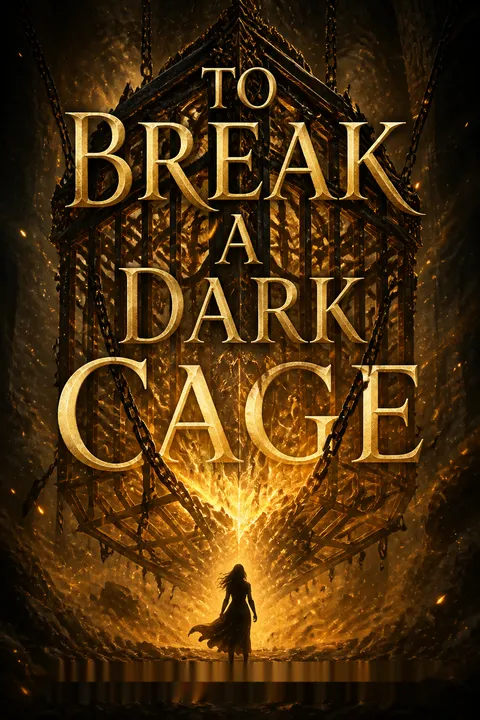
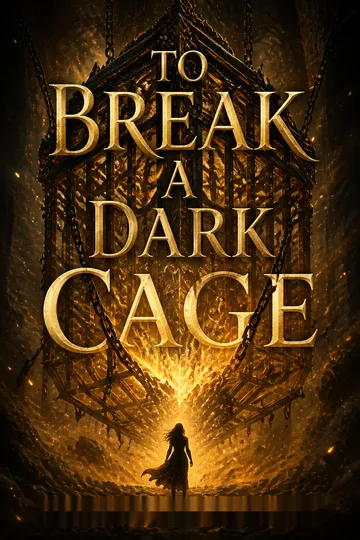
To Break a Dark Cage receives mixed reviews with an overall 3.98 rating. Readers praise the engaging fantasy world, character development, and morally grey protagonist Mordred. Many enjoyed the enemies-to-lovers dynamic and spicy scenes, though some found them poorly timed. Common criticisms include repetitive plot devices, lack of communication between characters, insufficient world-building, and overused separation tropes. The cliffhanger ending left readers divided—some excited for book four, others frustrated by unresolved conflicts. Several reviewers noted Gwen's character inconsistency and limited use of her powers despite growth throughout the series.
People Also Read
Characters
Gwendolyn Wright
The island's reluctant defenderGwen is a farmer's daughter from Kansas whose empathy is both her strongest instinct and her greatest vulnerability. She grows attached to a stray cat who is actually Grinn, then becomes entangled with Mordred and the political violence of Avalon. She is impulsive, funny, and prone to panic, but she does not confuse fear with a reason to abandon people. Her compassion extends even to those who threaten her, though she learns that understanding someone does not mean obeying or excusing them. Gwen's defining struggle is to turn care into action without letting more powerful people decide what her care should require.
Mordred
The iron-bound warlordMordred is Avalon’s ancient Prince in Iron, a formidable ruler who commands iron and built the Crystal that imprisoned the elementals. He is disciplined, suspicious, and capable of terrible violence, yet his severity grows from a vow to protect the island and its inhabitants. He thinks in terms of risk, sacrifice, and military necessity, often treating other people’s choices as variables he must control. Gwen unsettles that system because she is both someone he loves and someone he cannot safely keep. Beneath his tyrannical certainty lies a lonely man who fears that affection will become another route to loss.
Grinn
The vengeful Ash KingGrinn is a demon and elemental force of fire, capable of devastating violence and committed to revenge against Avalon. On Earth, he spent years disguised as the hostile stray cat Gwen tried to care for, so their history is more intimate than either would like to admit. His anger is fed by the loss of access to his family and by centuries of imprisonment and persecution. He treats compassion as weakness because he has learned to expect exploitation, yet Gwen's persistent concern reaches a part of him that his hatred cannot entirely erase. His suffering explains his rage without making his plans harmless.
Doc
The erratic wizard guideDoc is an eccentric wizard who seems to know far more about Avalon and its possible futures than he admits. He is sarcastic, fond of alcohol, and deliberately unhelpful when he believes Gwen must discover something herself. His knowledge makes him useful, but his refusal to explain everything frustrates her and keeps him from becoming a conventional mentor. Doc's obscured past and isolation give his humor an edge: irreverence is how he handles a life full of other people's stories. He can protect Gwen in moments of danger, but he does not take responsibility for making her choices easy.
Galahad
The honorable golden knightGalahad is an ancient fae knight who serves Mordred while remaining devoted to Zoe, the woman he loves. His sense of honor is stronger than his desire for convenience, and it repeatedly places him between loyalty, law, and affection. He understands Mordred's motives without pretending that those motives erase the harm he causes. His quiet steadiness contrasts with Mordred's force and Doc's disorder. Galahad's role is not simply to approve or condemn: he makes other characters confront the difference between caring for someone and agreeing with every choice that person makes.
Zoe
The Gossamer LadyZoe is an elemental with butterflylike wings and a gift for seeing into other people's hearts. She loves Galahad and values peace, but her commitment to Avalon’s law can put her at odds with the people she cares about. She is more perceptive than she is forceful, and often tries to mediate rather than dominate. Her compassion does not make her politically neutral: she must decide when restraint has become complicity and when justice risks becoming vengeance. Zoe's measured manner conceals the weight of choices she knows will cause pain.
Lady Thorn
The thorn-armed elementalLady Thorn is a rough, hostile elemental who commands brambles and has suffered under Mordred's rule. She is suspicious of his promises and quick to pursue revenge, but she also recognizes that Grinn threatens everyone on Avalon. Her willingness to bargain with Mordred is practical rather than trusting. Thorn embodies the anger of those who have been imprisoned and the difficulty of distinguishing justice from retaliation once power changes hands.
Eod
Gwen's loyal dogEod is Mordred's enormous, gentle dog and Gwen's constant companion through Avalon. He is enthusiastic about food, sticks, and attention, and eventually communicates his thoughts to Gwen after her transformation. His uncomplicated loyalty gives her comfort in a world where every relationship carries political risk. Eod is also a protector in his own earnest way, taking the role of her knight seriously even when he is more likely to wag his tail than frighten an enemy.
Bert
The scarecrow spymasterBert is a straw-stuffed scarecrow with a rusted metal pumpkin head who organizes a network of villagers opposed to elemental warfare. He is hopeful to the point of irritating certainty, and quickly casts Gwen as a savior because she has already helped free Avalon’s magic. Beneath his optimism is a practical understanding that ordinary people need allies and information to survive. Bert helps Gwen see that protection must include the people who are usually left out of decisions.
Lina
The sharp-tongued allyLina is an alligatorlike villager and one of Bert's closest allies. Wry and observant, she punctures Bert's grand claims and quickly reads the complicated feelings Gwen has for Mordred. Her humor makes the group's danger easier to bear without pretending it is small. Lina offers Gwen companionship without demanding that she become a symbol or a perfect hero.
Mirkon
The village intelligence manMirkon is Lina's cyclops husband and a member of Bert's village network. He helps gather information and supports the group's effort to prevent elemental warfare from destroying their lives. His practical concern for ordinary people balances Bert's faith and Lina's sharp skepticism. Mirkon treats Gwen as a person carrying too much, not merely as the answer to everyone else's crisis.
Maewenn
The metal-hearted cookMaewenn is the metal cook in Mordred's keep and one of the few people who openly cares for both him and Gwen. Her generosity is expressed through food, hospitality, and anxious affection. Though made of metal, she responds with recognizably human tenderness and grief. Maewenn offers the kind of domestic loyalty Mordred struggles to accept, and her presence gives Gwen a glimpse of community inside the keep.
Tim
The unfinished iron guardTim is an incomplete iron soldier who receives a name from Gwen and tries to help her. He communicates with slow gestures and gentle squeezes rather than elaborate speech. His uncertain movements suggest a being still forming a sense of self, but his care for Gwen is clear. Tim's existence quietly challenges the assumption that creations made to serve cannot possess their own emotional lives.
Percival
The resentful copper knightPercival is the Knight in Copper, one of Mordred's magically bound knights. He resents Mordred's authority and judges him as increasingly weakened by his attachment to Gwen. His willingness to challenge Mordred makes him a significant source of internal danger, even when he believes his choices serve a larger good. Percival's perspective shows how long coercive service can turn a former alliance into bitterness.
Lancelot
The fallen silver knightLancelot is the Knight in Silver and one of the men who once served alongside Mordred and Arthur. His long rivalry with Mordred reaches into Avalon’s present conflicts, where old loyalties and injuries become difficult to separate from the elemental struggle. Lancelot represents the human history beneath the legends: a former companion whose choices are shaped by pride, grievance, and the desire to settle a personal score.
Arthur
Mordred's absent kingArthur is Mordred's uncle and former king, remembered as a leader who inspired loyalty among his knights. Before his death, he entrusted Mordred with the duty of protecting Avalon. Mordred measures himself against Arthur's charisma and legacy, believing he cannot lead through affection as Arthur did. Though absent from the present action, Arthur's vow shapes Mordred's rule and his understanding of duty.
Bors
The Knight in NickelBors is one of Mordred's surviving knights and serves as a scout and soldier in the campaign against Grinn. His service is shaped by the magical bond that ties the knights to Mordred.
Gawain
The Knight in Gold's companionGawain is one of Mordred's knights, a former companion from Arthur's time and a participant in the march against Grinn. His history with the group recalls the fellowship that existed before Avalon divided them.
Tristan
The watchful iron knightTristan is one of Mordred's bound knights. He joins the search for Grinn and later faces a choice about his place in Mordred's service, representing the loyalty and resentment carried by the knightly group.
Walter
The generous tavern keeperWalter runs the town tavern where Gwen exchanges labor for food and shelter. When she accidentally burns a plate, he quietly protects her privacy rather than exposing her. His kindness gives Gwen a brief, ordinary refuge amid Avalon’s larger dangers.
Tiny
Mordred's iron dragonTiny is Mordred's enormous mechanical dragon, used to carry riders and support his campaigns. Though intimidating in appearance, he responds to care and courtesy, and Gwen treats him as a creature with a will rather than as equipment.
Ignir
The reclusive volcano dragonIgnir is a dragon near the volcanic region whom Mordred's scouts consult while searching for Grinn. His distance from the conflict makes him a small but useful point of information in the campaign.
Plot Devices
The Iron Crystal
A prison built from powerMordred's Iron Crystal contains elemental magic and can imprison elementals, preserving a fragile order by removing them from Avalon. It is also the source of his control over the knights, each bound through an embedded shard. The Crystal is both a political instrument and a moral burden: it prevents further elemental violence while inflicting prolonged confinement on those inside. Its return as a spider-carried creation makes the threat concrete, and its use as Mordred's sentence forces him to endure the punishment he imposed on others.
Avalon's ancient choice
Belonging with an irreversible costAvalon is presented as a living dream shaped by ancient beings rather than as an ordinary island. It selects whom it keeps, and Gwen's prior exposure to its elemental power gives her a chance to ask for a new gift. The choice is absolute: she can gain a place and power on Avalon only by giving up every possibility of returning to Earth, even after death. This device turns magical transformation into a question of allegiance and makes Gwen's decision both empowering and binding.
Mordred's dream shard
A secret bridge between loversMordred secretly embeds a small piece of enchanted iron in Gwen before she departs. He intends it to preserve a connection after her return to Earth, and it allows them to encounter each other in dreams. The link gives them a private space to share feelings they cannot express in waking life, but it also carries danger because Mordred can use the shard's magic against Gwen. The device therefore joins intimacy to control, exposing the difficulty of separating love from power in their relationship.
Zoe's control necklace
A believable baited weaknessMordred creates a crystal shard in his own body and binds its power to a necklace worn by Zoe. By giving her the ability to trigger pain in him, he creates a weakness that Grinn may mistake for an opening to attack. The plan depends on Zoe honoring her restraint and on Grinn believing the danger is genuine. It does draw Grinn from hiding, but its staged violence becomes real enough to frighten Gwen and reveal how readily strategic deception can harm the people inside it.
The volcano's demonic script
A delayed island-wide threatGrinn inscribes demonic magic across the caves beneath Avalon's dormant volcano. The writing feels foreign to Gwen and gradually corrupts the stone, preparing an eruption meant to destroy the island and everyone on it. It gives Grinn a deadline and makes simply defeating him insufficient unless his magic can also be stopped. His claim that the enchantment will die with him is crucial to the battle's outcome, though Gwen must trust that claim after his death.
The Iron Crystal Series Series
About the Author
Other books by Kathryn Ann Kingsley


Download PDF
Download EPUB
.epub digital book format is ideal for reading ebooks on phones, tablets, and e-readers.








